
What happened, and why
What Elena actually did: (a), the renewal meeting. Elena met Renee, walked her through the scorecard and confirmed the renewal terms. Renee thanked her and asked nothing more. Keystone spent another afternoon with Victor and helped cut the waste on line 3. Seven months later, Harbor moved the contract to Keystone. Best call: (d). An hour with Renee and Victor would have put line 3 on the table before Harbor decided.
(d) Best: Exhibit 3 says Renee wants line 3 fixed this year. Meeting Renee and Victor lets Elena understand the problem before proposing a solution.
(c) Reasonable: goes after the real problem, but offers a fix before asking what Harbor wants.
(b) Reasonable: asks the right kind of question, but of the wrong people. Renee and Victor own line 3.
(a) Weak: protects the contract, but doesn't answer Renee's question about who helps Harbor get better.
Five ideas from Chapter 1
Treat an important relationship like cash or equipment: give it an owner, know what it's worth, and plan for it.
In the case: Elena managed the account. Nobody treated the relationship as an asset, with a value and a plan. The asset isn't Harbor or its people; it's what Northline and Harbor can do together.
Doing 100 percent of the job, and thinking that's all the relationship can do.
In the case: Northline was perfect on the contract and never asked what else Harbor needed.

Doing the job (Transactional Value). Building something new together (Creative Transactional Value). Help with no price tag (Non-Transactional Value).
In the case: Northline only did the job. Keystone built something new together: fixing line 3, and it won them the contract. Help with no price tag would be something Elena gave that asked nothing back, not even the renewal. Northline gave none.

Everyone you know, and the people they know. One contact sees only a small part of it.
In the case: Elena's only regular contact was in purchasing. She'd met Renee once and knew Victor only from hallways. The people deciding were outside her view.
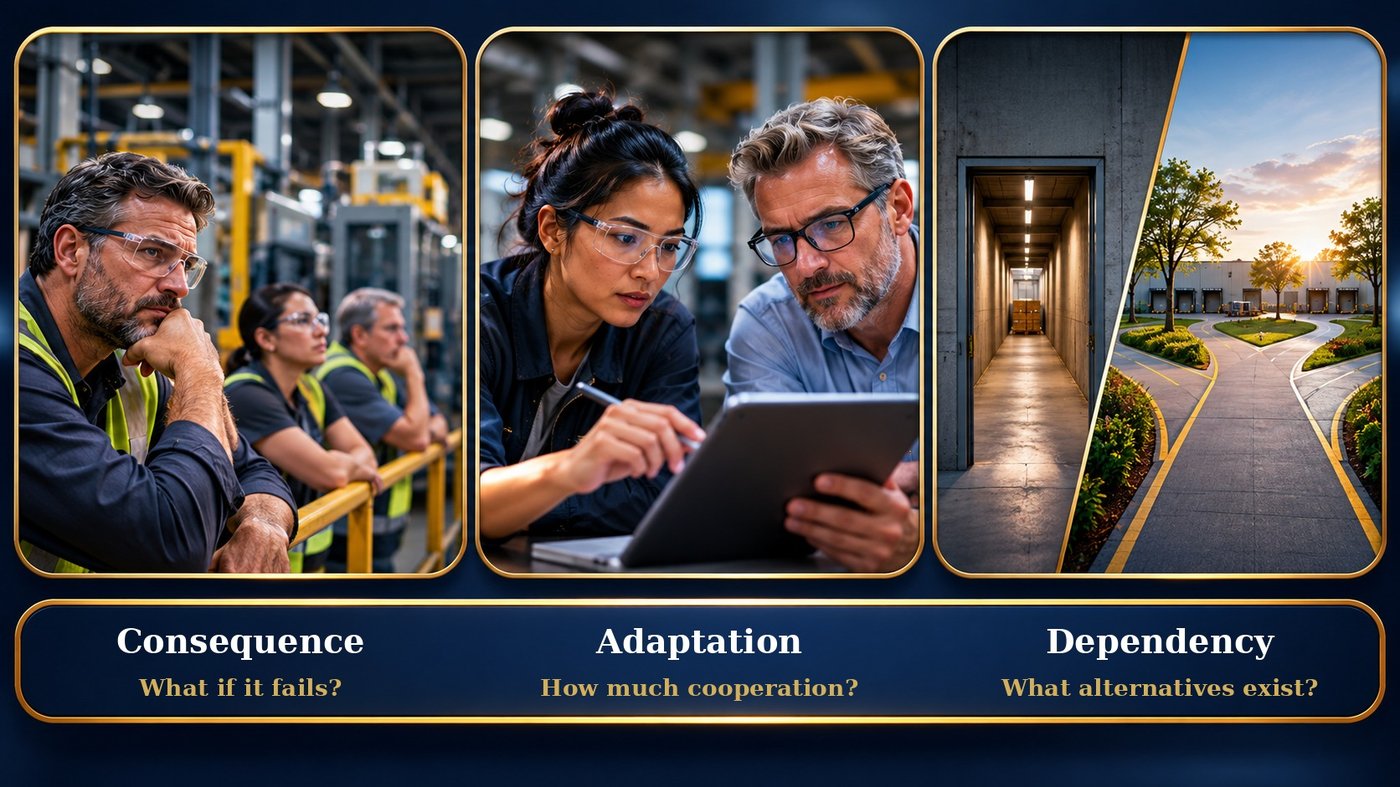
Three questions, which the book calls Consequence, Adaptation and Dependency: What happens if it fails? How much cooperation does the work need? How easily could either side replace the other?
In the case: Check Exhibit 4: Harbor is 22% of sales (losing it hurts), the teams work together every week (high cooperation), and Harbor can switch in 90 days. That last one is one-sided: Northline needs Harbor far more than Harbor needs Northline. High stakes.
Even with the best call, Elena could still lose the account. Keystone was already inside the plant. RAM raises your chances; it doesn't guarantee the outcome.
Doing the job keeps you in the game. Helping them get better makes you hard to replace.